
When it comes to horror stories, there’s something inherently human about the primal need of reassurance that our lives aren’t as bad as someone else’s. Why else would we watch the sort of media where the heroes have absolute hell thrown at them? Why else would we repeatedly put ourselves through jumps-cares and screeching violins?
In our enjoyment of the media which deliberately sets out to freak us out to the point of paranoia, we actively seek out these opportunities. For some reason, we aren’t satisfied with the way our brains work. To rectify this, we watch scary films, we read horror stories, or we attend haunted house events. We alter our brain chemistry by flooding it with norepinephrine (that which creates the fight-flight-freeze response).
We’re obsessed with being terrified. I’m no such exception. To honour this, I created this list of the seven visual mediums I found fascinatingly scary.
This list is by no means an official list of scariest stories ever. Three of the items aren’t even films. It’s my personal thoughts on why each of these items work as scary.
And I won’t hold back on the spoilers.
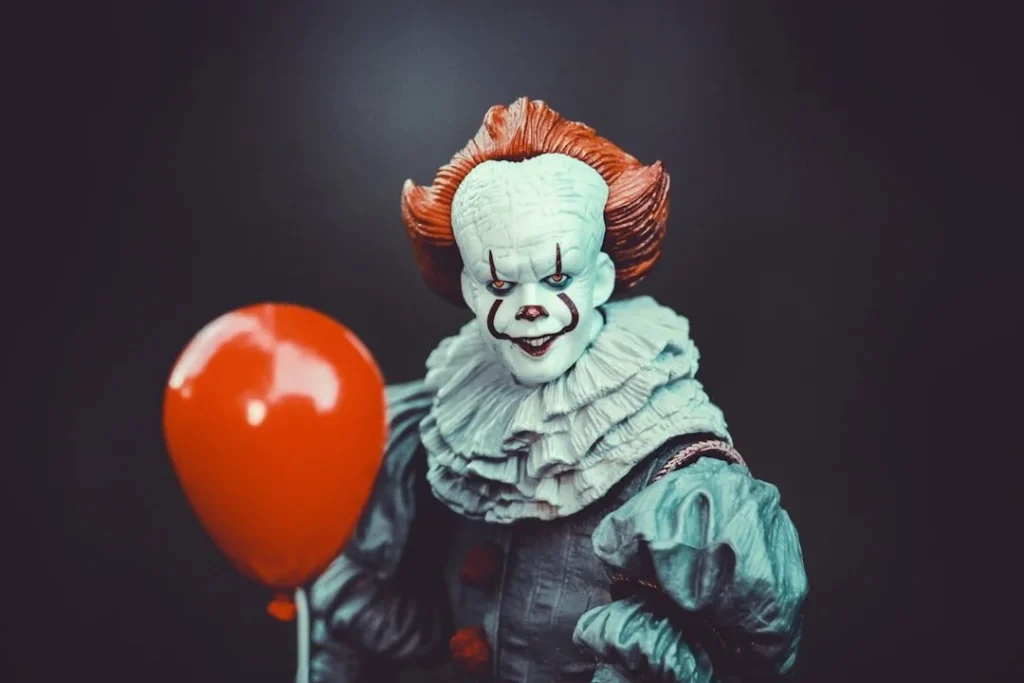
Horror Story #1: The 2017 Film “It”
I saw this with my father on Father’s Day in 2023. This is the 2017 supernatural horror film directed by Andy Muschietti and written by Chase Palmer, Cary Fukunaga, and Gary Dauberman as the first chronological half of an adaptation of the Stephen King novel.
In this rendition, Muschietti et al remain pretty faithful to the 1986 novel of the same name by Stephen King. Not least because Pennywise’s hair is the right colour. Bill Skarsgård, I’m reliably informed, did as much of the stunts as he could. Including the contortion in the refrigerator. And the cast’s reactions to seeing him in costume were genuine.
Hoo boy, do I love accuracy in adaptations.
What I found quite powerful about It, though, is the combination of naturalistic lighting of the sets, the rhythm of the final edit for the build-up of anticipation combined with the sound edits and score, and of course the lack of reliance on computer-generated images.
This is a horror film grounded in reality at every turn, and it’s this that makes It one of the slow-creeping horror stories I still check the drains for.
Horror Story #2: The 2015 Film “Crimson Peak”
A 2015 gothic romance film directed by Guillermo del Toro and written by del Toro and Matthew Robbins. Crimson Peak stars Mia Wasikowska as idealistic American heiress Edith Cushing who marries British baronet Thomas Sharpe (Tom Hiddleston). Bad shit happens when she moves to the dilapidated house back in Britain.
I saw this soon after its release, and it’s still with me. This film was my first foray into Gothic stories, the “unique” structure and disillusionment character arc of the principal character creates a story which makes you stop and wonder just how easily everything can go tits up.
In the Gothic story, the suspense of horror is still there, but the main drive is the main character slowly losing their grip on what’s real with events beyond their control. Old houses, like Allerdale Hall, often represent inheritance issues, and the Sharpe siblings have financial difficulties (this is why they run the marriage-and-murder scam involving Edith). The monster represents a negative human emotion, and the ghosts in this film to represent Sharpe’s guilt over Lucille’s actions. Sharpe himself turns into a ghost upon his death, and only passes on when Edith forgives him. Lucille doesn’t pass on and spends the rest of eternity playing her piano.
What stuck with me most of all is the natural progression the plot takes. You can’t help but think that the ending was the only logical conclusion to come to. And that is what makes Crimson Peak one of my favourite horror stories.
Horror Story #3: The 2005 Dr Who Two-Parter “The Empty Child” and “The Doctor Dances”
The Empty Child is the ninth episode of the first series of the British science fiction television programme Doctor Who. It first broadcast on BBC One on 21 May 2005, written by Steven Moffat and was directed by James Hawes. It is the first of a two-part story, which concluded with The Doctor Dances, on 28 May.
Let me start by saying that this series was the first series of Doctor Who I ever saw. My Doctor is David Tennant (the Tenth Doctor), but this series, in particular these episodes and the first, were the ones I still remember even (dramatic gasp) ten plus years later.
I’ve never been able to look at shop mannequins the same way again.
The Empty Child is one of the most emotionally haunting episodes of Doctor Who because it plays on our fears of doing the right thing and getting it “wrong”.
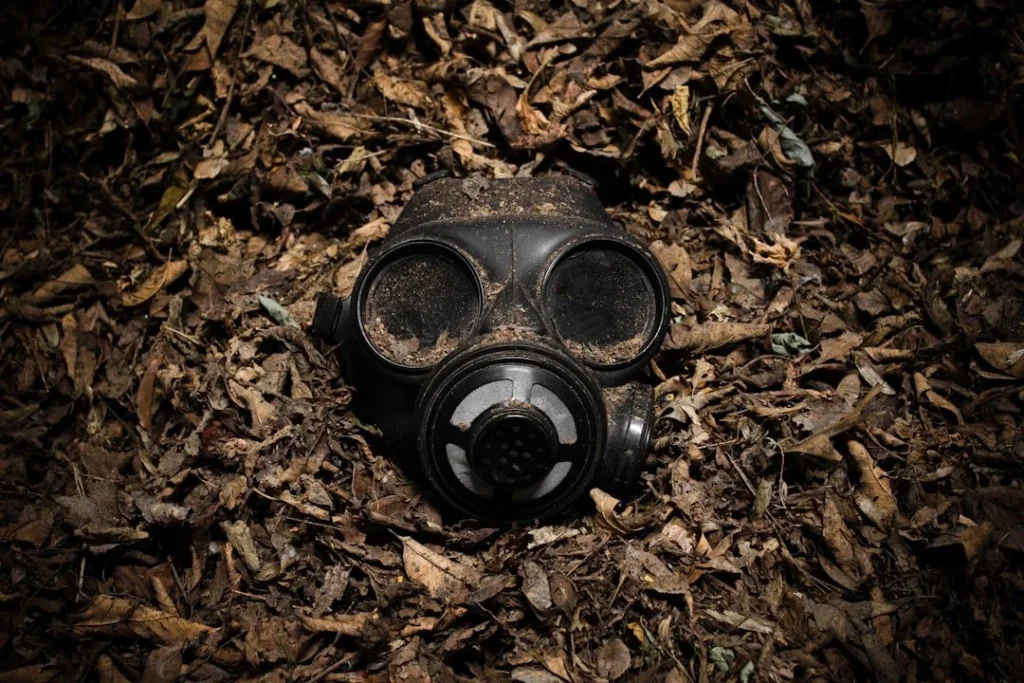
Set in the Blitz of 1940, the character of Nancy had a child incredibly young, and she told everyone that the child was her little brother. That boy injured himself during a bombing while exploring a crashed spaceship, and the healing nanites tried to heal the boy. But the boy was wearing his gas mask, and the nanites fused the mask to his face because the nanites couldn’t determine what was skin and what wasn’t. So the boy went looking for his mother, because that’s what scared children do.
And this is our episode’s bad guy. A scared little boy who just wants his “Mummy.”
What this two-part episode gets right in terms of the emotional sledgehammer is the portrayal of the boy. The curious head tilts as the childishly high voice asks for his mother. The repetition of his phrases (he doesn’t have any other lines) “Are you my mummy?” and “I’m looking for my mummy.” “I’m scared, mummy.” The terror of Nancy’s makeshift family of homeless kids of him and his motives makes you think he really is a monster.
And the gas-mask just sells it.
Who wouldn’t fear a lone child in a gas-mask asking for his mother? And during one of the most terrifying moments of British history, too.
Horror Story #4: The 2018 Film “Winchester”
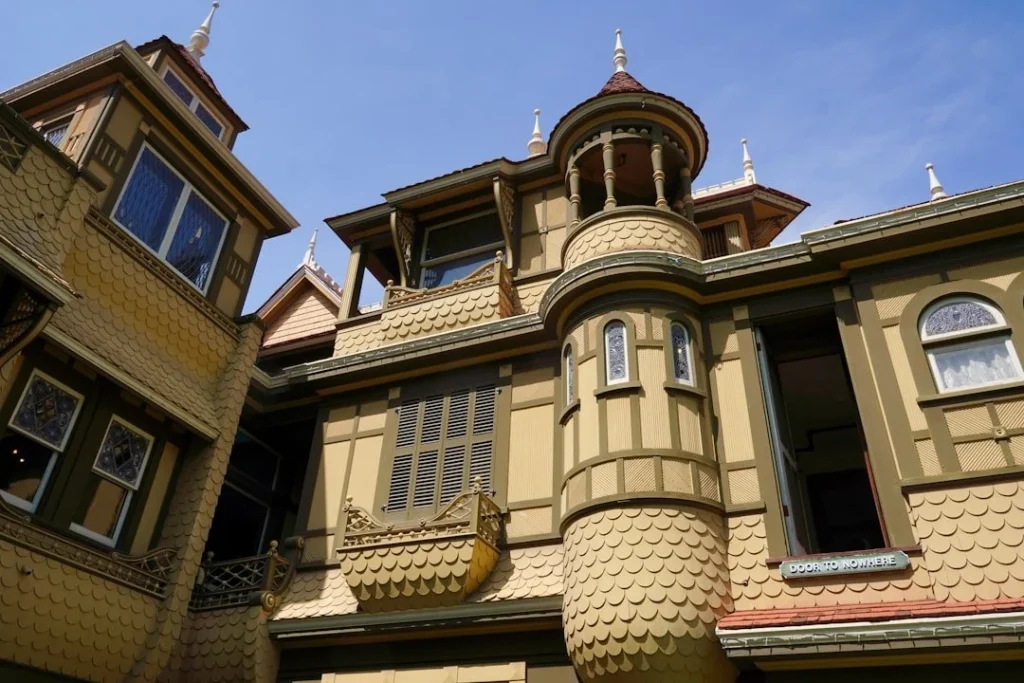
Also subtitled as The House that Ghosts Built, this 2018 supernatural horror film is directed by Michael and Peter Spierig, and written by the Spierigs and Tom Vaughan. Starring Helen Mirren as Sarah Winchester, the widow of the manufacturer of the firearm, the film follows a doctor assessing her for the Winchester Company as she’s haunted by spirits inside her San Jose mansion (the Winchester Mystery House) in 1906.
First of all, I watched the behind-the-scenes for this episode, and if the directors could create the effects without the use of computers, they would.
And secondly, the cast and crew filmed in the house for parts, and they all said it was haunted in some way, shape, or form. Like, seriously. There’s something about that house that doesn’t like people.
As I mentioned with It, when you do as many of the effects in-studio as you can, you don’t get the terrible graphics and the reactions of the cast are natural. Things like lighting and tone can always be added and adapted later, but there are sometimes you just need to slam a door closed with fishing wire, yank someone down a hall on a tray, and turn a free-standing mirror while your actor’s back is turned.
What really got me with Winchester was Helen Mirren. Her portrayal as a woman haunted by the consequences her husband’s business was only emphasised by the malevolent ghosts haunting her. Computer-generated images will never display a convincing haunting performance as a human.
Horror Story #5: The 2019 Video Game “Pathologic 2”
Pathologic 2 is a 2019 horror-adventure game, developed by Russian game development studio Ice-Pick Lodge and published by tinyBuild. It is a remake, reboot, and remaster of the developer’s earlier 2005 video game Pathologic. This game is the Haruspex’s story, with a demo DLC (Marble Nest) and separate game (Pathologic 3) of the Bachelor’s story also available. The name in the original Russian is Мор. Утопия, transliterated to Mor. Utopiya, and pronounced ˈmor ʊˈtopʲɪjə, lit. ‘More. Utopia’ – a pun on Thomas More’s Utopia and the Russian word for “plague”.
I suppose what makes the Pathologic games scary is the way time itself is presented in a game where you’re trying to save an isolated town from a plague when they all hate you. (Especially if you play as the Bachelor. Hoo boy, does the town hate Daniil.) Time is done realistically, sleeping doesn’t pause the week you have to stop the plague. Entering a church actually speeds up time, but you do need to go in the church for certain parts of the game.
The exact location and date are never mentioned, though the culture and architecture hint at early 20th century fused with ancient steppe culture and traditions, and dialogue suggests we’re dropped around the time of the Russian Civil War.
One other aspect which makes Pathologic 2 stand out compared to others in the genre is the symbolism and surrealistic nature. You constantly question the reality of the game. There’s a character called Mark Immortell who acts as a supernatural theatre director who criticises the player’s “acting” and frequently breaks the fourth wall, referring to the game’s development, referencing the mechanics and inner workings of the game’s systems and referencing events or aspects from the original Pathologic. You the player also encounter spotlights, “scene changes” between day and night and a disembodied stagehand-like voice appearing intermittently throughout the game.
The music itself, composed by Vasily Kashnikov and Theodor Bastard, just adds to the feel of haunting doom in a folklore kind of way.
When you add everything together, you have a game that makes you question everything. And what’s scarier than wondering if anything is real at all?
Horror Story #6: The 2007 Dr Who Episode “Blink”
Blink is the tenth episode of the third series of the British science fiction television series Doctor Who. It was first broadcast on 9 June 2007 on BBC One. Hettie MacDonald directed the episode, and this is the only episode in the 2007 series written by Steven Moffat.
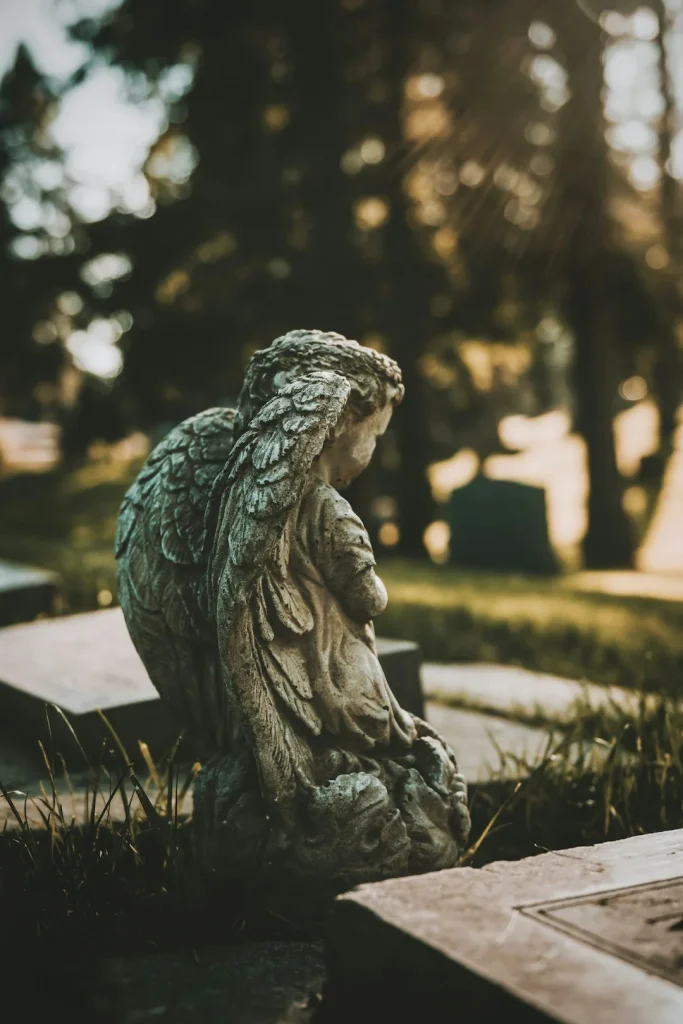
What’s terrifying about this episode is the use of turning an everyday item into something else. We’re taking statues and turning them into time-hopping assassins. They move between your blinks. One touch and you’re sent back in time. We see these sorts of statues everywhere, in graveyards and fountains, and that’s what’s terrifying. Because if there are time-hopping assassins, we’re all fucked.
The angels are two actresses in fibreglass resin-soaked costumes, makeup, and prosthetics. There wasn’t much in the way of digital editing, just freezing the angels in place if they wobbled on set. Which just goes to show why CGI shouldn’t be the go-to answer for everything (right, Marvel?).
The impact of the Weeping Angels has led them to become voted as the scariest monster on the show in a 2007 poll, with the Master in second and the Daleks in third place. You could say the concept of the Angels themselves is what makes them scary, and as the Doctor was missing for most of the episode, it only increased the threat.
Horror Story #7: The 2019 Film “Joker”
As opposed to the Death in Paradise episode with the skeleton in the classroom, I found this film was more memorable overall. The only part of the episode I can remember is the conclusion: a science teacher murdered his wife, buried her body under a new limestone patio, and used her skeleton as a prop in his classroom.
“Joker” is a 2019 psychological thriller film directed by Todd Phillips, who co-wrote the screenplay with Scott Silver. The film is based on the DC Comics character and set in 1981. It stars Joaquin Phoenix as the Joker and serves as a stand-alone origin story for the character.
As in the psychological horror genre, life shits on Arthur Fleck until he becomes the Joker. The film takes inspiration from the comic series Batman: The Killing Joke. Phoenix’s acting was impeccable as a failed professional clown caring for his ailing mother in Gotham City during the recession. He won the Academy Award for Best Actor for the role.
This film steps back from the DC Extended Universe and from the superhero genre. We’re not in the world of the Justice League (yet). The film roots us in reality. One review states that society’s disregard of those who are less fortunate will create a person like the Joker. Another review said the film is an “in-your-face examination of a broken system that creates its own monsters.”
I find I have to agree. The best horror stories are the ones we ground in everyday situations.
Conclusion
As with most forms of art, horror is subjective. What one person finds terrifying is another person’s kink. But what links all these mediums is that they share a single origin: humanity’s fear of what if?
- What if my guilt manifests into the ghosts of those I helped kill? (Winchester, Crimson Peak)
- What if I lose my childhood innocence too young? (It, The Empty Child)
- What if society creates its own destruction? (Joker, Pathologic 2)
- What if there are entities out there who could destroy us before we even know it? (Blink)
The very concept of the unknown is enough to generate fear. And that’s what makes the genre so terrifying.


My Top Five Common Horror Tropes - A Study in Gee
[…] But the point is, I’ve come across the same old methods of making us sit back and wondering why we have goosebumps. (And no, I’m not talking about the use of music in a film’s soundtrack.) […]