
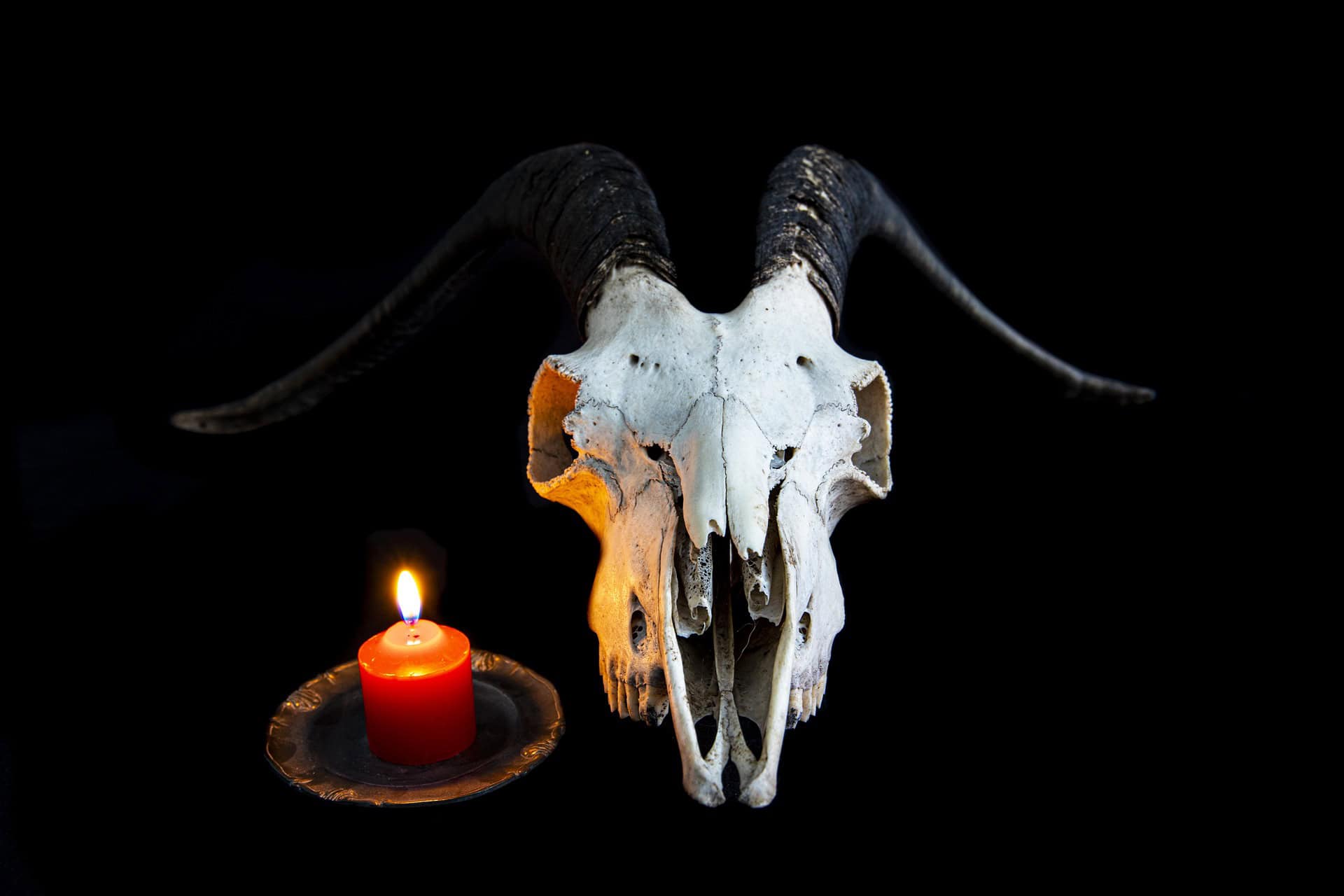
Some figures weren’t designed to guide you. They were designed to show you something you’d rather not look at.
That’s an uncomfortable distinction. And the discomfort is, in part, the point.
There’s a common assumption in modern spirituality, one so embedded it rarely gets examined. That if something appears in mythology, a god, a spirit, a figure, it exists to be followed, worked with, devoted to. That every presence is a guide. Something to align with. Something that, if you approach it correctly, will offer you direction.
This assumption shapes how people read mythological texts, how they build spiritual practices, and how they interpret figures that were never designed to be interpreted that way. It’s so pervasive that questioning it can feel like missing the point entirely.
But the assumption itself is the thing worth questioning.
Where That Assumption Comes From
It’s a modern lens. Not an ancient one.
Contemporary spirituality (particularly in the West) has a strong preference for structure, reassurance, and clear roles. Guide. Teacher. Protector. Something you can place yourself beneath, something that offers direction, something that makes the relationship legible. There’s comfort in knowing what something is for.
This preference isn’t inherently wrong. But it becomes a problem when it’s applied universally: when every figure in every tradition gets filtered through it regardless of whether that figure was ever intended to function that way.
The framework gets imported into traditions that weren’t built around it. And something gets lost in the process.
What Gets Lost
Older stories weren’t built that way.
They weren’t instruction manuals. They weren’t devotional texts designed to make you feel supported or safe or held. They existed to explain, to warn, to reflect the world back at you, including the parts of it that were arbitrary, cruel, or simply beyond human control.
And sometimes, to unsettle.
A story that unsettles isn’t failing at its job. It’s doing it. Discomfort was a feature, not a flaw: a signal that you were encountering something that didn’t fit neatly into the existing order, something that demanded a response beyond simple categorisation.
Not everything that appears in a story is there to help you.
Some of it is there to show you something. Those are not the same thing.
The Function of These Figures
Some figures aren’t meant to be followed.
They disrupt. They expose. They complicate things that seemed settled. They don’t offer clarity, they force you to confront the absence of it, to sit with the fact that some questions don’t have clean answers and some figures don’t have clean functions.
This is where people get uncomfortable. Because there’s nothing to step into. No role to adopt, no behaviour to mirror, no posture to emulate. Just something to recognise.
That recognition is harder than alignment. It asks more of you. You can’t simply decide to follow something and feel the relationship click into place. You have to sit with it, observe it, allow it to be what it is rather than what you need it to be.
For a culture that prefers actionable spirituality, this is genuinely difficult. Observation without action can feel like failure. Engagement without outcome can feel like a waste of time. But the discomfort here is informative — it points directly at the assumption being challenged.
Where Interpretation Starts to Drift
When everything is treated as a guide, something gets flattened.
The differences between figures start to disappear. A figure that was originally disruptive, ambiguous, and difficult (one that existed precisely because the tradition needed a presence that resisted easy categorisation) becomes something softer. More usable. More aligned with what people want from their spiritual practice.
The edges get sanded down. The tension gets resolved. What was once genuinely unsettling becomes a particular flavour of guidance, a different kind of teacher, a more challenging sort of protector. The category expands to accommodate the figure rather than the other way around.
It happens gradually, and often in good faith. People encounter something powerful and want to engage with it. The instinct to build a relationship is natural. But the relationship that gets built is sometimes more with the idea of the figure than with what the figure actually represents, and those can be very different things.
Why That Happens
Because it’s easier.
If every figure can be worked with, called on, aligned to, then nothing has to remain unresolved. Nothing has to sit outside your control. The entire landscape of mythology becomes navigable: a vast resource to draw from rather than a territory that includes things that actively resist being drawn from.
This is appealing. It’s also a significant flattening of what the tradition actually contains.
The Alternative
To recognise that some figures aren’t there for you. Aren’t offering anything. Aren’t asking to be followed, worked with, or built a relationship with.
They exist within the story. And what they represent exists whether you engage with it or not.
Not everything symbolic is an invitation.
This is the shift that changes how you read mythology, how you approach spiritual practice, and how you understand your own relationship to figures and forces that sit outside easy categorisation. It’s not a withdrawal — it’s a more honest form of engagement. One that respects what something is rather than reshaping it into something more convenient.
What This Changes
It removes the need to interact with everything, to assign personal meaning to everything, to turn every figure into something usable.
It allows some things to remain observational. Interpretive. Unresolved. Present without being pressed into service.
This is not a passive position. Observation is a skill. Interpretation without personalisation (the ability to understand something without making it about you, without inserting your own needs into the reading) is genuinely difficult to develop. Most of us are trained to do the opposite.
But it’s also frequently the more accurate position. And accuracy matters, particularly when you’re working with material that has been misread, flattened, or appropriated so often that the original shape of it is hard to find.
Where This Actually Matters
If you approach everything as something to follow, you lose specific capacities.
You lose the ability to observe without inserting yourself. To interpret without personalising. To understand something without needing to act on it or build a relationship with it. These aren’t failures of engagement, they’re different, quieter forms of it. And they’re often the ones that produce the most accurate understanding.
A figure that disrupts is doing something specific. A story that doesn’t resolve is structured that way deliberately. A tradition that contains genuinely difficult material isn’t asking you to make that material comfortable; it’s asking you to encounter it honestly.
The Part Most People Skip
You don’t need to build a relationship with everything you encounter.
Sometimes the point is simply to see it properly. To understand what it is, what it was designed to do, what it represents within the tradition it comes from; without immediately asking what it means for you or how you can work with it.
Not everything is a guide. Some things are just there to be understood.
And understanding something clearly, without needing it to be useful, without needing it to offer something: that’s its own form of practice. Arguably a more rigorous one.
Some figures were built to carry weight, not to distribute it. The most honest thing you can do with those figures is let them carry it, and look at what they’re carrying, and sit with what that reveals.
That’s where the real work is. Not in the following. In the seeing.







Why Old Stories Feel Different (And Why That Matters) - A Study in Gee
[…] (Not everything is meant to be followed.) […]